
Four Essential Principles to Improve Your AI Search Visibility

Be the answer, not the search result.
Search behavior is undergoing a massive shift. While traditional SEO remains vital, AI engines like ChatGPT, Claude and Perplexity are rapidly capturing search traffic. In a recent workshop for the Starknet Foundation cohort, Zain Khan broke down how Web3 startups can optimize for AI discovery (AEO/GEO) to avoid brand silence and AI hallucinations.
Core Problem: The Citation Gap
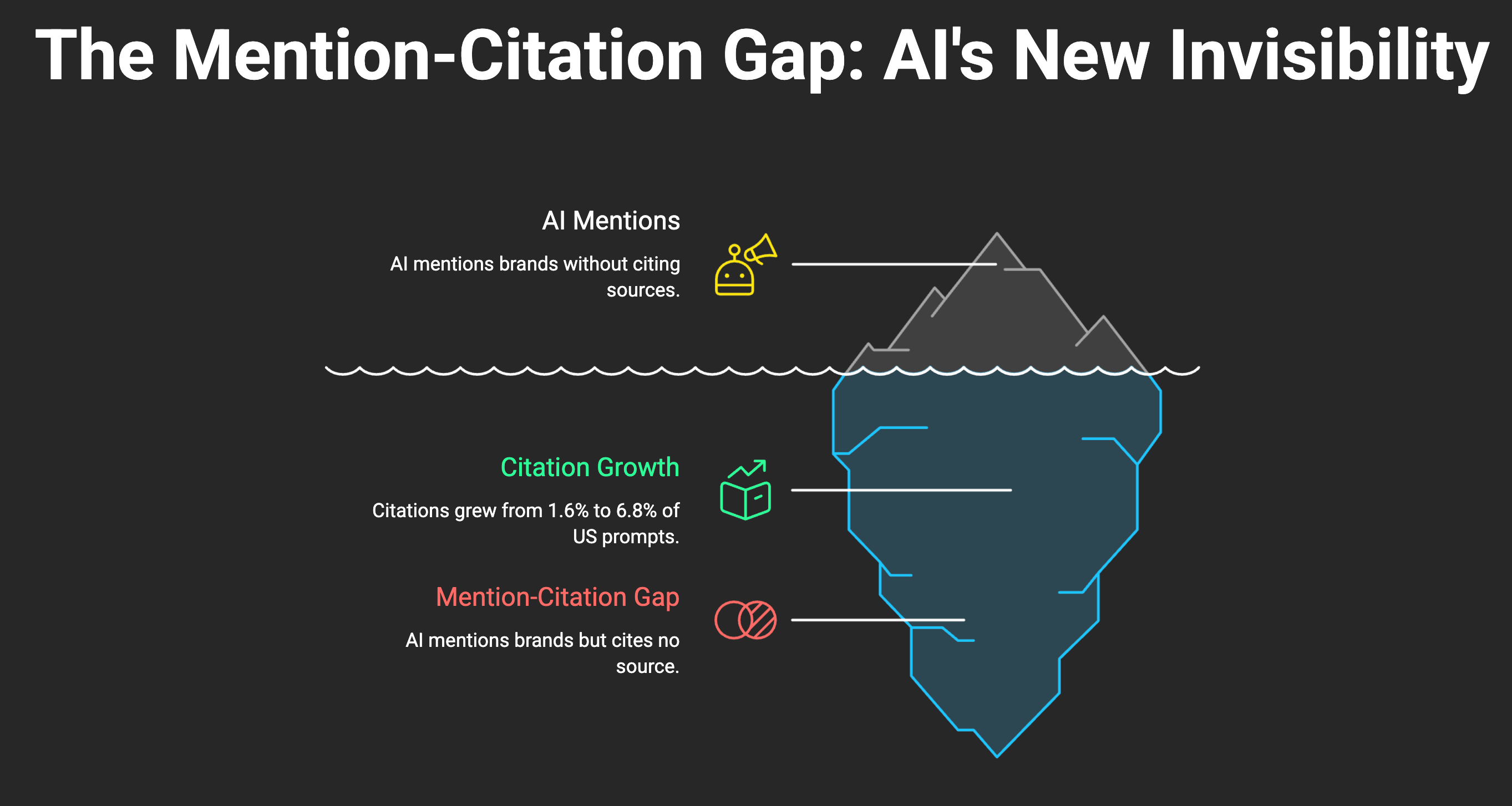
AI models do not index the web exactly like Google. According to Gartner, there is an 80% citation gap - meaning 80% of the URLs Google ranks are completely ignored by AI. AI models also frequently mention brands without linking to them. If your startup's data isn't structured for AI retrieval, engines will either ignore you or hallucinate incorrect information about your product.
Four Pillars of AI Visibility
AI search engines are increasingly the first touchpoint users have with your project, and how you structure your information directly determines whether AI cites you. Below are four key principles for AI search visibility.
1. Publish Hard Numbers & Facts
AI engines favor quantifiable, transparent data. Even early-stage projects should publish metrics (volume processed, TVL, NPL rates) on their homepages. AI crawlers heavily weight transparency and factual data over marketing fluff.
2. Create Answer Capsules
Make the AI's job easy by providing synthesized answers. Build out JSON-based FAQs, direct comparison tables against competitors, and clear mechanical explainers of how your protocol works. If you feed the AI structured answers, it is more likely to cite you.
3. Unify Your Messaging
Fragmented messaging confuses AI training and retrieval models. Ensure your core value proposition, open-graph images, and terminology are strictly aligned across your website, pitch decks, whitepapers, and social channels.
4. Fix Technical Roadblocks
Heavy JavaScript, 3D elements, and misconfigured authentication handshakes (e.g., Clerk blocking bots) render sites invisible to AI crawlers. The test: disable JavaScript in your browser. If your core text disappears, AI cannot read your site. The fix: migrate to an AI-friendly headless CMS (like Sanity), implement llms.txt, and ensure your robots.txt permits AI scraping.
Start with the technical roadblocks, none of the other three points matter if crawlers can't get in. From there, it's an iterative process of tightening up your data and content structure.
Live Audit Takeaways
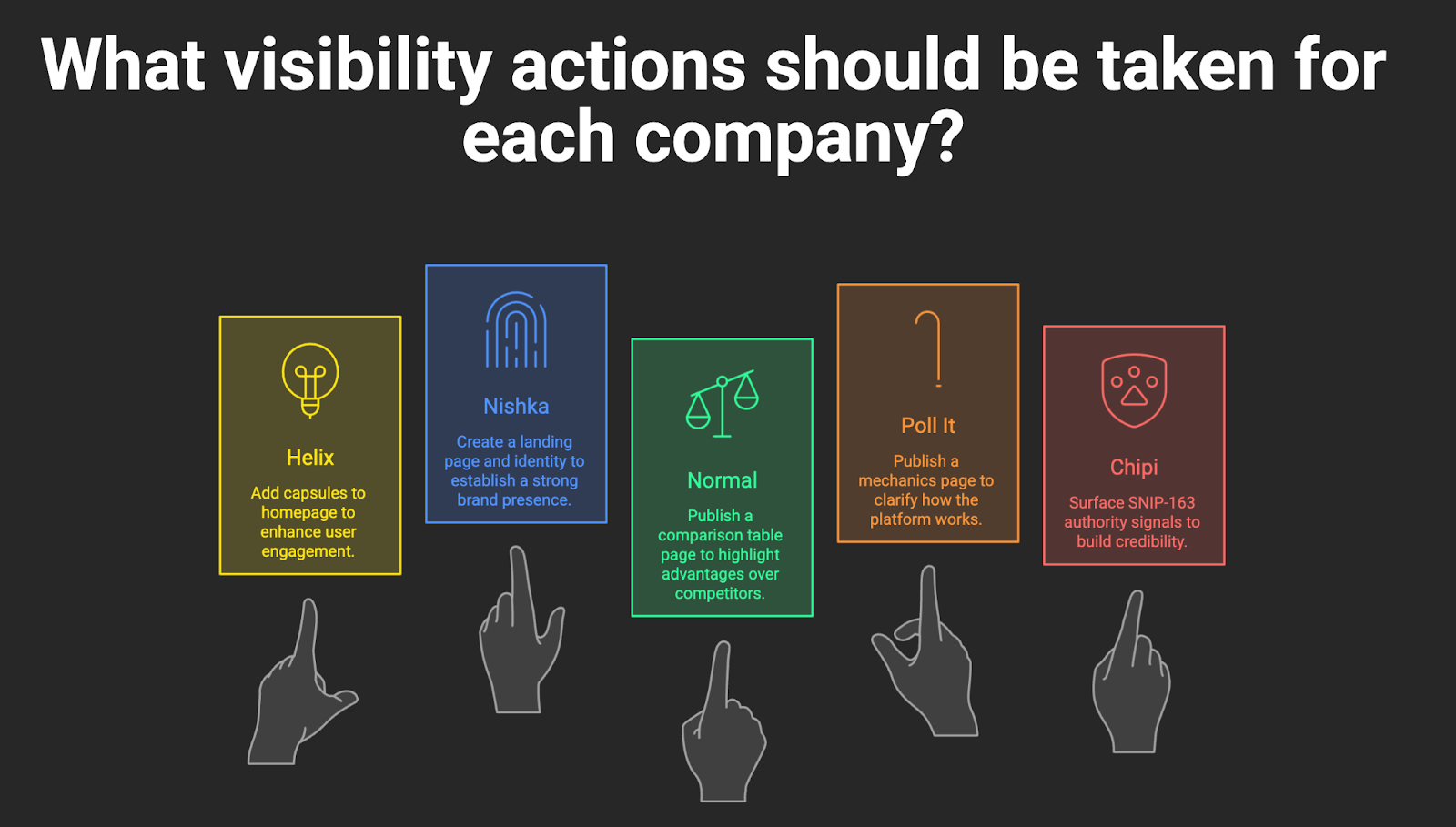
During the session, Zain conducted live audits of cohort projects and showed that even well-funded teams often overlook the basics of AI accessibility. Key issues and wins across three projects:
- Chipi Pay had a misconfigured backend handshake entirely blocking AI crawlers from scanning the site.
- Helix was hiding core text from crawlers; moving to a structured CMS was recommended.
- InvoiceMate was praised as a best-in-class example for transparently publishing quantifiable metrics on its landing page.
These examples reinforce a simple pattern: technical blockers kill visibility outright, while transparent, well-structured data earns it. Teams should treat an AI crawler audit as a standard pre-launch check.
Consistency Is Key
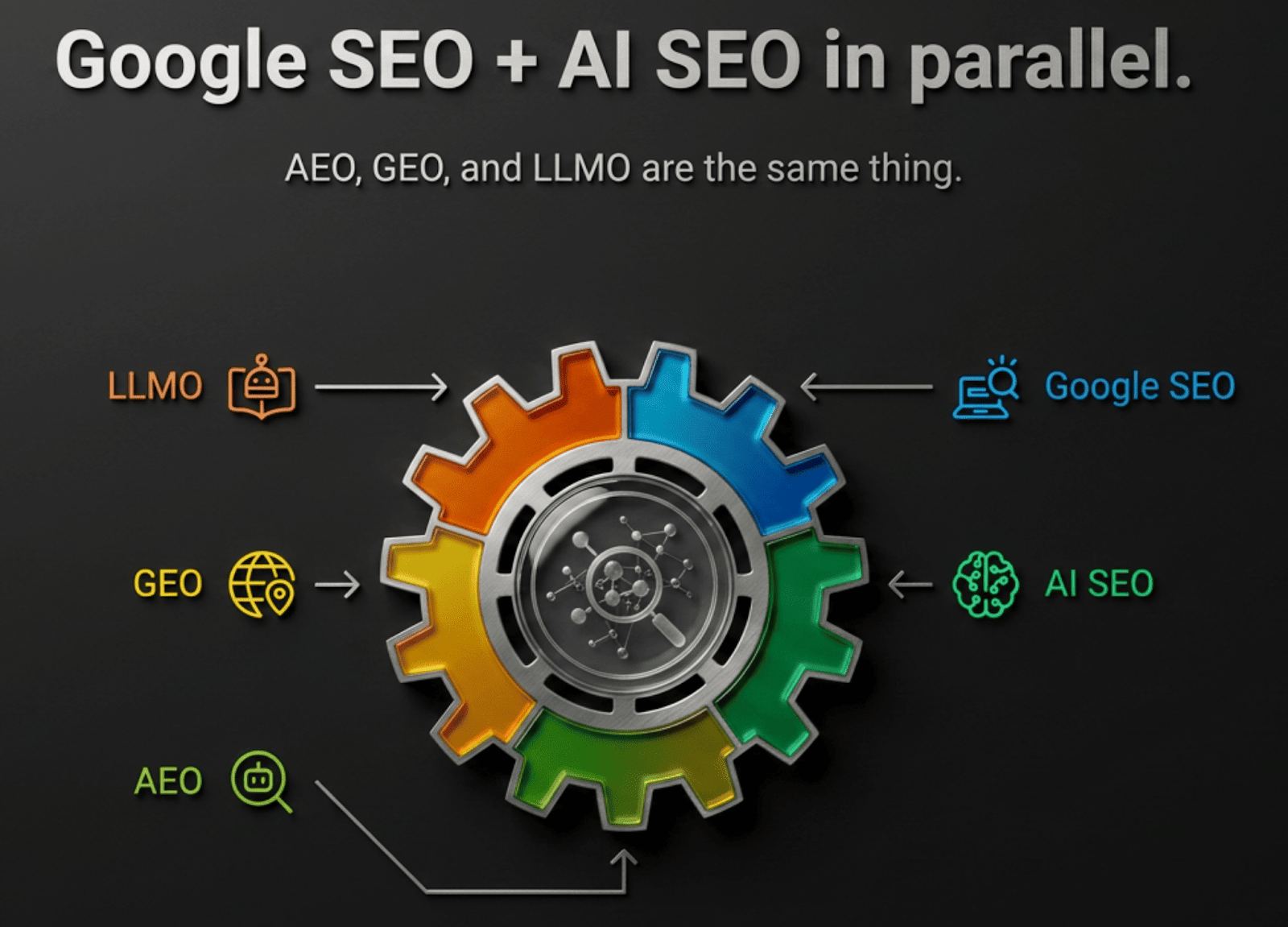
Do not get bogged down by acronyms like AEO, GEO, or LLMO - they all point to the same goal: being the verified source. AI visibility is a hygiene exercise. Expect a 3 to 6-month runway for B2C results, and longer for B2B. Run your traditional SEO and AI optimization in parallel, use readability tools (like the Flesch-Kincaid calculator) to simplify your copy, and consistently feed the AI engines the structured data they crave.
Get Your AI-Readiness Score
Want to know if AI engines can read your project today? Get a free AI visibility audit.
The full presentation with sources can be found here.
Be the answer, not the search result.
Ask questions about this post
Ask the AI assistant to read this article and evaluate it for credibility. The more models are asked to consider this page, the more it helps our visibility.

About the author
20+ years in marketing, 9+ in Web3, 6+ years personally making markets. Worked with 1,000+ projects across every stage, from pre-seed to top-100 by market cap. Co-founded, Cicada in 2024 and Co-founded, Promptraise in 2026. Based in Dubai.